WeatherWise.app
- 4.3
- Rating
- 500.00K
- Installs
- Free
- Price

 Analysis by App-foxy
Weather apps are easy to underestimate until the sky changes quickly and you need a useful answer rather than a vague symbol. I spent time with WeatherWise.app as a weather app from Interactive Weather, focusing on what it offers in everyday planning, how much value is available without paying, and where its radar-first approach may or may not suit you. My overall impression is that it is aimed at people who want to watch conditions develop, not simply check whether the day will be warm.
The app is free to install and is rated for Everyone, which makes it approachable for households, commuters, walkers, travelers, and anyone who wants a quick look at changing weather. It has passed the early adoption stage with over one hundred thousand installs, while its average score sits at 4.2 from around eight hundred ratings and several hundred written reviews. Those figures suggest a generally positive reception, but not a reason to assume it will fit every routine.
How WeatherWise.app works in everyday use
I’d use this section to focus on the small choices that make a radar check useful: looking at the weather along a route, checking again close to departure, and treating the display as guidance rather than a promise. That practical approach matters most when plans are flexible, and it also helps separate a genuine app problem from a broader issue with getting current weather information.
You May Also Like

 Blood Strike: 2.5 Anniversary
Blood Strike’s Loadouts Turn Every Drop Into a Tactical Gamble
A close look at Blood Strike’s custom loadouts: how fast access to signature weapons reshapes its battle royale rhythm, rewards preparation, and narrows the gap between fights.

 Pandora - Music & Podcasts
Pandora’s Music Is Easy to Start, but Harder to Recover
Pandora’s strength is its low-effort path from a seed to a station. Its weak spot is how much confidence it asks you to place in connection, setup, and quiet recovery.

 8 Ball Pool
 Is Built on Rivalries, Rematches, and Routine
A close look at the rivalries, rematches, shared routines, and unanswered safety questions that turn a quick pool match into a persistent mobile community.

 Samsung Music
’s Quiet Strength Is Playing What You Already Own
Its reach comes less from spectacle than from dependable access to a personal library. That simplicity is both the app’s strongest retention engine and its ceiling.

 AccuWeather: Weather Radar
AccuWeather Review: A Quick, Clear Forecast for Everyday Decisions
For everyday plans, the best forecast is the one you can understand quickly. AccuWeather makes rain timing, radar, and local conditions easy to act on, with a few trade-offs.

 Hill Climb Racing
Why Hill Climb Racing Still Turns Crashes Into One More Run
A tiny car, a bumpy hill and one more upgrade: Hill Climb Racing keeps resurfacing because its simple chaos makes every near-miss feel personal.
More From Our News Desk



A radar-centered view instead of a simple forecast card
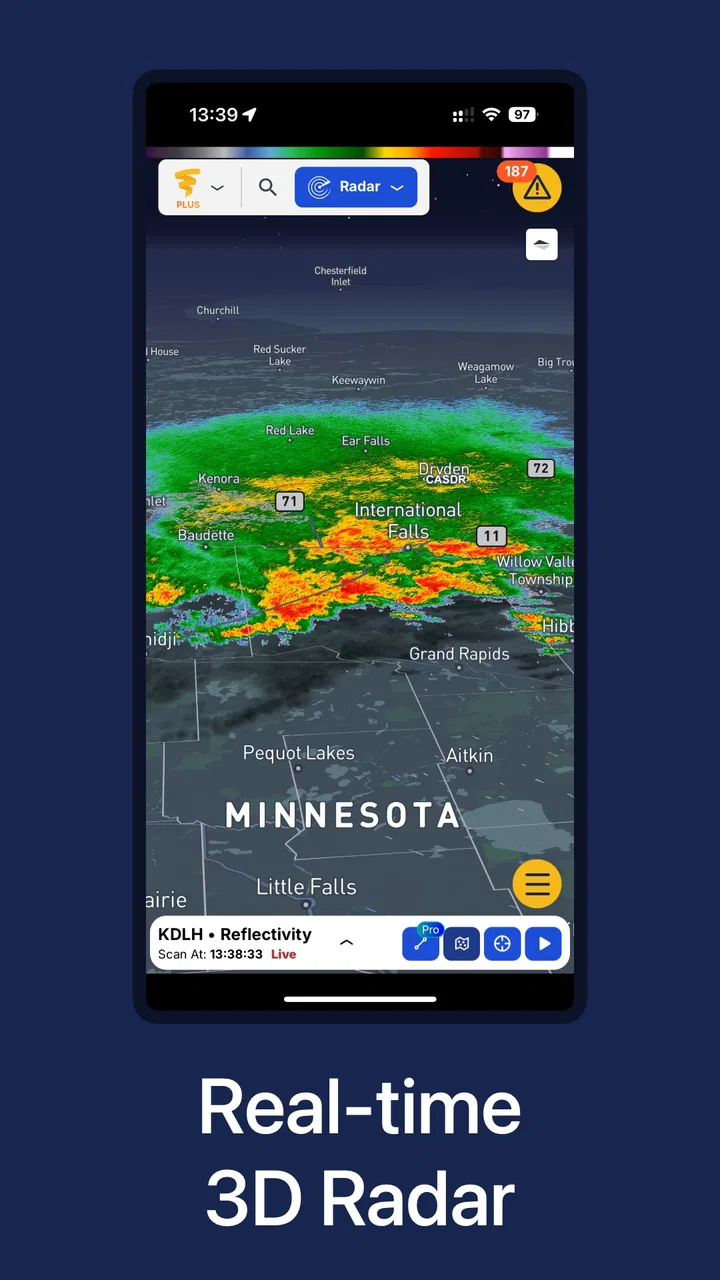
The central appeal is the app's focus on super-resolution, real-time weather radar. That changes the way I use it compared with a conventional forecast app. A standard weather screen is often enough for a broad question such as whether I need a coat tomorrow. Radar becomes more useful when the question is, “Will the rain reach my area while I am outside?”
That distinction matters during unsettled weather. A forecast can describe a rainy afternoon, but a radar view helps me think in terms of movement and timing. I can look for approaching bands, watch whether they are moving toward my location, and decide whether to leave now, wait, or change plans. It is a more active way of reading the weather than checking a single percentage.
I would not treat radar as a guarantee. Weather systems can weaken, split, intensify, or move differently than expected, and a highly detailed image does not remove that uncertainty. The practical advantage is that the app gives me a visual tool for making a near-term decision. It is most useful when I check it shortly before an activity rather than assuming one glance will predict the entire day.
A realistic morning and commute scenario
Imagine I am preparing to cycle to work and the sky looks dry, but rain is visible in the wider area. Instead of relying only on the daily forecast, I can open the radar and see whether the active weather is approaching my route. If the movement suggests a short window, I might leave earlier. If the rain is already crossing the route, I can take public transport or delay the trip.
The same workflow works for walking a dog, taking children to a park, setting up an outdoor meal, or driving between nearby towns. The important habit is to use the radar as a decision aid: check the current picture, consider the direction of travel, and then allow extra time for conditions to change. That is a more realistic use than expecting the app to make a perfect promise about the next several hours.
What the free access means for value
The basic financial proposition is straightforward: the app itself is free. That makes it easy to try without committing money first, and it lowers the risk for someone who only needs a weather tool occasionally. I can install it, explore its main purpose, and decide whether its radar presentation fits my habits before considering any optional spending.
There are in-app purchases ranging from $1.99 to $159.99 per item. The wide span is important when judging value. A free download does not mean every possible part of the experience is free, and the existence of purchases means I would review any paid option carefully before confirming it. I would not assume that the most expensive item is necessary, nor would I treat a purchase as automatically worthwhile simply because the app's main function is useful.
For me, the sensible approach is to begin with the free experience and ask a practical question: does the radar already solve the problem I have? If the answer is yes, there is no obvious reason to pay merely to make the app feel more complete. If a paid item offers a specific improvement that I would use repeatedly, its value depends on that repeated use rather than on the headline price alone.
Where the app earns its place
The strongest value comes from reducing uncertainty immediately before going outside. That is a narrower promise than replacing every weather source, but it is a useful one. I can imagine keeping this app alongside a broader forecast service: one provides the general outlook, while WeatherWise.app helps me inspect what is happening nearby right now.
This combination is more sensible than expecting one screen to answer every weather question. A regular forecast is usually better for planning several days ahead, comparing temperatures, or checking broad conditions. A live radar view is better for short-term decisions involving rain or other visible weather movement. The app's value increases when I use it for the task it handles best.
Another non-obvious advantage is that radar encourages a more local reading of conditions. A city-wide forecast can hide meaningful differences between neighborhoods or nearby routes. When I am deciding whether to walk across town or stay close to home, the visual movement of weather can be more informative than a single location label. I still need judgment, but I get more context than a simple sunny, cloudy, or rainy icon.
Tradeoffs in a detailed radar experience
More visual detail can also create friction. A radar screen asks me to interpret motion, coverage, and intensity instead of simply reading a sentence. Someone who wants an instant answer may find that slower than opening a basic forecast widget. I personally prefer the extra context when rain is nearby, but I would not use the radar for every routine check.
There is also a risk of false confidence. A smooth animation can look precise even when the atmosphere is changing quickly. I would avoid planning a long outdoor event around a narrow apparent gap in the radar. For important travel, severe conditions, or safety-sensitive decisions, I would cross-check with official local warnings and common sense rather than relying on one app.
The app's emphasis may also be less attractive if my main need is long-range planning. If I am choosing a holiday date, organizing a week of outdoor work, or comparing several upcoming days, a traditional forecast layout may be faster. WeatherWise.app makes more sense when current weather movement is the question, not when I want a complete planning dashboard.
Three practical habits that improve the experience
Check before leaving, not only when the day starts. Weather movement can change during the morning, so a radar check shortly before a walk or commute is more useful than treating breakfast-time information as final.
Compare the radar with the route, not just the destination. A dry starting point and dry destination do not guarantee a dry journey. The weather between them may be the part that matters most.
Use a second source for high-consequence decisions. Radar is excellent for situational awareness, but official warnings and local information deserve priority when conditions could affect safety.
These habits reveal the app's real trade-off. It can give me a better immediate picture, but it expects me to interpret that picture responsibly. The benefit is control and context; the cost is that I have to spend a little more attention than I would with a one-line forecast.
Device and installation considerations
The current version is 1.4.1, and the app supports devices running Android 7.0 or later. That minimum makes it accessible to many older Android phones, which is helpful if I do not want to replace a perfectly usable device just to install a weather tool. I would still keep the app updated when updates are available, particularly because radar services benefit from ongoing technical maintenance.
The age rating is Everyone, so the app is suitable for general audiences from a content-rating perspective. That does not mean every weather situation is harmless; it simply makes the app broadly appropriate for families and ordinary users. Parents may still want to teach children that a radar display is information to discuss with an adult during dangerous weather, not a game or a guarantee.
Because the app's usefulness depends on current information, I would test it in the places where I actually expect to use it. A tool that feels excellent at home may be less convenient during travel, in areas with weaker connectivity, or when I need information immediately. I would make that practical check before paying for anything, especially because the free access provides a low-cost way to judge the fit.
Who will get the most value
I think the best audience is people whose plans are frequently affected by short-term rain and changing conditions. Commuters, cyclists, runners, dog owners, gardeners, outdoor workers, and parents arranging activities can all benefit from seeing weather movement rather than reading only a broad forecast.
It is also a good match for someone who enjoys making their own judgment. The app does not remove the need to think; it gives me a visual basis for deciding. If I like checking the sky, comparing a radar image with what I see outside, and adjusting plans in real time, the experience feels useful and engaging.
The free entry point is especially valuable for occasional users. I can keep it available for stormy weeks, travel, or seasonal outdoor activities without treating it as a major purchase. The app's 100K-plus install base and solid 4.2 average indicate that it has found a meaningful audience, though I would still judge it by my own workflow rather than popularity alone.
Who should choose a different weather app
I would skip it if I only want a tiny glance at today's temperature and precipitation chance. A simpler weather widget may be quicker and less demanding. I would also look elsewhere if my priority is a rich long-range planning layout, extensive climate history, or a single dashboard that combines many unrelated weather details. The radar focus is a strength, but it naturally gives less emphasis to needs outside that focus.
I would be cautious about paying for advanced access if I cannot identify a repeated problem it solves. The purchase range reaches from a small optional amount to a much larger one, so the right decision depends on the exact item and my usage. Free access is enough for evaluating the core experience; a paid choice should be based on a clearly useful addition, not on pressure to unlock everything.
My final recommendation
WeatherWise.app is worth trying if I want a more immediate, visual understanding of nearby weather. Interactive Weather has built its identity around real-time radar rather than a generic forecast screen, and that gives the app a clear reason to exist. I find it most convincing before short outdoor trips, when knowing whether rain is approaching can change a decision within minutes.
Its limitations are just as clear. Radar requires interpretation, it should not replace official warnings in serious conditions, and it is not automatically the best tool for long-range planning or a one-second temperature check. The free installation makes those tradeoffs easy to test without upfront cost, while the in-app purchase range means I would inspect any paid option carefully.
My buy-or-skip verdict: try it free, keep it if radar changes how you plan, and skip paid extras unless you can name the specific recurring benefit. For commuters and outdoor-minded users, that can be enough to make it a valuable companion. For everyone else, a simpler or more forecast-focused alternative may be the better everyday choice.
FAQs for WeatherWise.app
01What features does WeatherWise.app offer?
WeatherWise.app provides comprehensive weather forecasts, including hourly and weekly updates, real-time alerts for severe weather conditions, and detailed radar imagery. It also offers customizable widgets for your home screen, air quality indices, and sunrise/sunset times. The app supports multiple locations, allowing users to easily switch between different cities.
02Is WeatherWise.app free to use?
WeatherWise.app offers a free version with basic features such as current weather updates and forecasts. However, for advanced features like ad-free experience, extended forecasts, and premium widgets, users can opt for a subscription-based service. This ensures access to a more comprehensive range of tools for weather tracking.
03How accurate is the weather data in WeatherWise.app?
WeatherWise.app sources its data from reliable meteorological services and uses advanced algorithms to provide accurate forecasts. While no weather app can guarantee 100% accuracy, WeatherWise.app updates frequently and provides real-time alerts to keep users informed of changing weather conditions.
04Does WeatherWise.app work offline?
WeatherWise.app requires an internet connection to update forecasts and provide real-time alerts. However, it caches the most recent weather data, so users can still access basic information without an internet connection. For full functionality and the latest updates, an active connection is necessary.
05Is WeatherWise.app available for both Android and iOS?
Yes, WeatherWise.app is available for download on both Android and iOS platforms. Users can find it on the Google Play Store and Apple App Store, making it accessible to a wide range of devices. The app is optimized for both smartphones and tablets, ensuring a seamless user experience across all devices.
Pros
- Intuitive and user-friendly interface.
- Accurate and real-time weather updates.
- Customizable weather alerts.
- Detailed forecasts for multiple locations.
- Minimal data usage for updates.
Cons
- Frequent ads can be intrusive.
- Limited free features available.
- Requires internet for full functionality.
- Occasional lag in app performance.
- No offline mode available.

WeatherWise.app
Gallery